Why Your Wife Brings Up the Past, and How to Respond
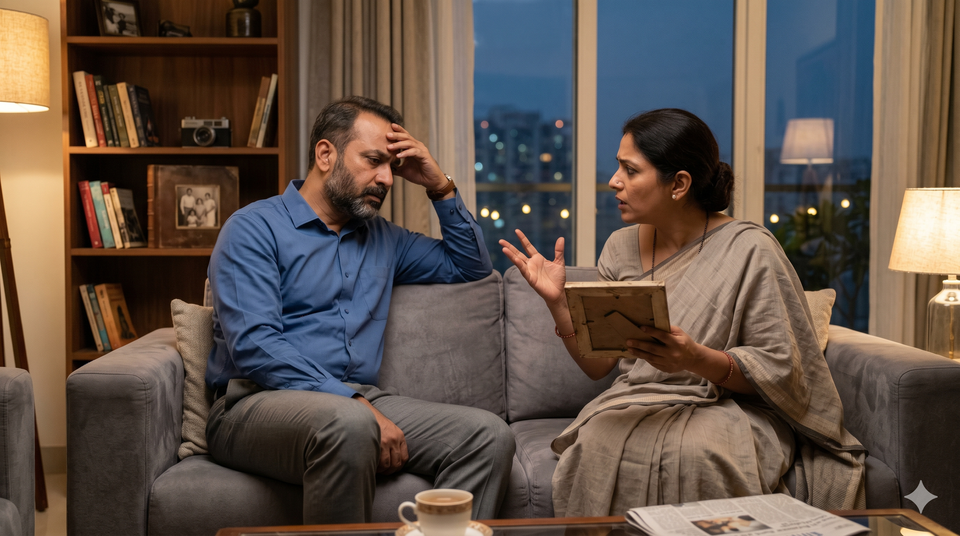
An old argument may return because the hurt remains unresolved, the same behaviour is happening again, or you and your wife disagree about what was repaired. Sometimes the past is also brought into a conversation unfairly. Start by finding out which situation you are in, rather than assuming she cannot let things go.
You remember apologising. You may have made real changes. Then the old incident comes up again, and you feel as though nothing you do will ever count.
That frustration deserves to be understood. So does the reason she is returning to it.
An apology and a repair are not always the same thing
You may remember the conversation as: "I admitted it. We talked. It was finished."
She may remember: "He apologised, but I never felt he understood what hurt."
Neither account can be established from the fact that the topic returned. You need to ask.
Try: "When this comes up again, I realise we may not understand the repair in the same way. What still feels unresolved?"
Listen for a specific answer. Was the harm acknowledged? Was an agreed change made? Is there something she needs now that was never discussed?
Check whether the past is still happening
Before asking why an old incident keeps returning, check whether the pattern has actually stopped.
For example, you apologised for dismissing a concern last month. Today, you interrupted a similar concern. To you, the earlier incident is history. To her, today's conversation may look like its continuation.
This is an illustrative example, not a claim about your marriage.
Ask yourself: "What would someone see me doing differently?"
A change in intention matters. A change your partner can experience matters too.
Ask about the hurt without agreeing to every accusation
Understanding someone does not require accepting an inaccurate account of events.
You can say: "I remember that detail differently. I do understand that you felt alone when I walked away. I want to take responsibility for leaving without explaining when I would return."
Keep your ownership specific. Avoid using a disagreement about one detail to dismiss the whole experience.
Equally, do not make an admission you do not believe simply to end the conversation. That can create more resentment later.
A practical way to respond when an old fight returns
1. Notice your urge to close the topic
If your first sentence is "We have already discussed this," pause. You may be trying to end your discomfort before understanding the request.
You can say: "I am getting defensive. I want to understand this properly."
2. Clarify what needs attention now
Ask: "Is there something about today that reminded you of it, or something about that incident we never addressed?"
This helps separate a current problem from an unfinished conversation.
3. Reflect and check
"What I am hearing is that the apology happened, but the change did not last. Is that right?"
Do not treat your interpretation as a verdict. Give her room to correct it.
4. Own the part that is yours
"I agreed to tell you when plans changed, and I did not follow through."
Specific ownership gives you something to act on. A broad declaration that you are a terrible husband does not.
5. Agree on one next step
Choose an action both of you understand. Ask when you will check whether it helped. Repair needs follow-through, not an increasingly elaborate apology.
What if every disagreement becomes a trial of your past?
Repeated hurt needs attention. Repeated humiliation is not a repair method.
If several old incidents enter every discussion, suggest separating them: "I am willing to talk about what happened then. Can we finish today's issue and choose a time for that conversation?"
If there are insults, state the boundary calmly: "I want to hear what still hurts. I cannot have a useful conversation while we are insulting each other."
Apply that boundary to your own behaviour too. If either of you feels afraid, threatened, or controlled, ordinary conversation scripts are not enough; prioritise safety and appropriate individual support.
You cannot set a deadline for forgiveness
You can take responsibility, change your behaviour, and ask for a fair conversation. You cannot require your wife to feel differently on your schedule.
She is also a person with responsibility for how she speaks and acts. Emotional leadership does not mean carrying both sides of the relationship indefinitely.
For your next conversation, begin with one question: "What still needs attention, and what would a meaningful next step look like?"
Then listen for the answer before defending the apology you already gave.
Frequently asked questions
Why does my wife bring up the past after I have apologised?
An apology may not have addressed the hurt, an agreed change may not have lasted, or a current incident may resemble the earlier one. Sometimes you disagree about what happened or whether it was repaired. Ask what remains unresolved rather than assuming her motive.
Does bringing up old arguments mean my wife has not forgiven me?
Not necessarily. Forgiveness, trust, and agreement about what happened are different things. Someone may choose to forgive and still want a recurring behaviour addressed. You cannot determine what she feels from the fact that an old incident was mentioned.
What can I say when an old fight comes up again?
Try: "Is something happening now that reminds you of that incident, or is there something we never addressed?" Listen to the answer, reflect what you understood, and own the specific part that is yours before discussing a next step.
How do I respond if I remember the argument differently?
Explain the difference calmly without dismissing the hurt you can understand. For example: "I remember that detail differently, but I understand that leaving without saying when I would return hurt you." You can acknowledge impact without agreeing to an account you believe is inaccurate.
Is it reasonable to set boundaries around repeated arguments?
Yes. You can offer a specific time to discuss an unresolved issue and ask to keep the conversation free of insults. Apply the same standard to yourself. A boundary should help a respectful conversation happen, rather than indefinitely prevent someone from raising a concern.





Member discussion